
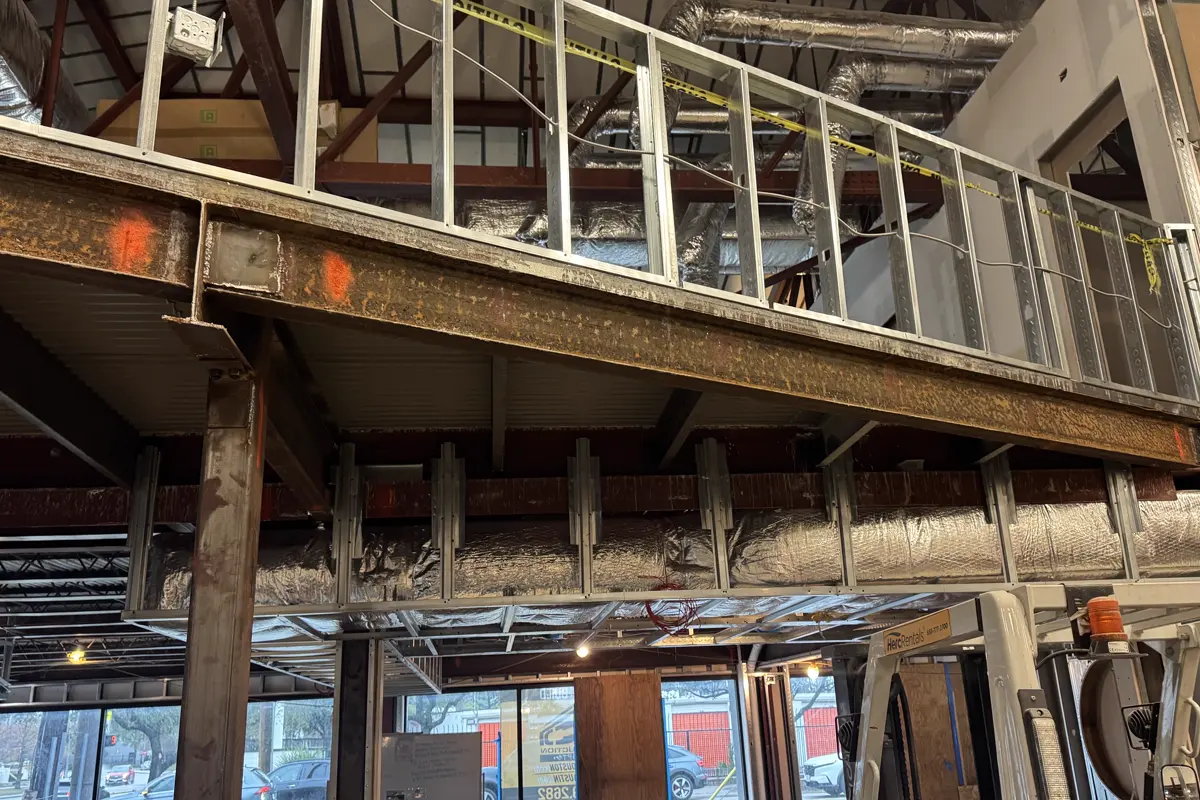
Structural Steel Fabrication & Installation
01
Commercial Structural Steel Fabrication and Field Installation
Structural steel needs to be accurate in the shop and practical in the field.
At Texas Outlaw Welding, we provide commercial structural steel fabrication and installation for contractors, builders, developers, property owners, architects, and engineers.
Our work can include beams, columns, frames, supports, plates, brackets, and other project-specific structural components based on approved construction documents.
We do more than fabricate steel and send it to the jobsite.
Because we also provide field installation, we can think through access, erection sequence, connection points, transportation, and jobsite conditions before fabrication is complete.
That connection between the shop and the field helps keep the structural steel scope moving toward installation instead of stopping at fabrication.
02
How the steel scope runs
Structural Steel Built From the Project Documents
Commercial structural steel should be built around the actual requirements of the project.
We work from approved drawings, specifications, and other project documents that define the steel scope.
Depending on the job, that may include:
- Structural beams
- Steel columns
- Frames
- Support steel
- Connection plates
- Brackets
- Base plates
- Structural assemblies
- Project-specific fabricated components
Each piece needs to fit the design and work with the surrounding construction.
That means dimensions, connection details, steel sizes, weld requirements, bolt locations, and installation conditions all matter.
Structural Steel Fabrication
Fabrication is where the project drawings become physical steel components.
Depending on the scope, our fabrication work may include:
- Cutting
- Fitting
- Welding
- Drilling
- Preparing plates
- Fabricating brackets
- Building structural frames
- Assembling supports
- Preparing connection components
The exact process depends on the plans and the final use of the steel.
A structural beam may look simple once it is installed, but the fabrication still needs to account for length, connection points, plates, holes, supports, and how it will be handled in the field.
Accuracy at this stage helps reduce problems later.
Structural Steel Installation
Once the steel is fabricated, it still has to become part of the building.
We provide field installation for the structural steel we fabricate.
Depending on the project, installation may include:
- Setting beams
- Setting columns
- Installing frames
- Positioning structural assemblies
- Making field connections
- Installing support steel
- Coordinating lifts
- Working around existing construction
Installation planning is especially important on projects where access is limited or the steel must be set at a specific point in the construction schedule.
Fabrication With Installation in Mind
A component can be correct on paper and still be difficult to install if field conditions were not considered early enough.
We look at questions such as:
How will the steel reach the jobsite?
Can the component be transported in one piece?
Is crane or lift access available?
Can the steel physically reach the installation area?
Are connection points accessible?
Does another trade need to complete work first?
Will surrounding construction block access later?
Should a larger assembly be fabricated in sections?
Those questions can affect the way the steel should be fabricated.
Thinking through installation before the steel leaves the shop helps reduce avoidable field problems.
03
What we fabricate
Beams and Structural Members
Steel beams are used across many types of commercial construction.
They may support:
- Floors
- Roofs
- Mezzanines
- Large openings
- Equipment
- Canopies
- Other structural systems
The beam size and configuration are determined by the structural design.
Our role is to fabricate the beam according to the approved requirements and prepare it for the connections and installation conditions shown in the project documents.
Steel Columns
Columns carry loads vertically through the structure.
Depending on the building, they may support beams, roof systems, elevated platforms, mezzanines, or other structural components.
Column fabrication may require:
- Base plates
- Cap plates
- Connection plates
- Bolt holes
- Brackets
- Welded attachments
- Other project-specific details
Because these components often connect several parts of the structural system, accurate fabrication is critical.
Structural Steel Frames
Some commercial projects require complete steel frames rather than individual beams or columns.
A frame may be used for:
- Large openings
- Structural support
- Equipment areas
- Building additions
- Architectural features
- Other project-specific conditions
These assemblies require multiple components to fit together correctly.
We fabricate structural frames from the approved design and can install them in the field as part of the same steel scope.
Connection Plates and Brackets
Small components can create major problems if they are wrong.
Connection plates, brackets, base plates, stiffeners, and other steel details may be much smaller than the main structural members, but they help connect the system together.
These pieces may need exact:
- Hole locations
- Dimensions
- Thicknesses
- Welds
- Angles
- Attachment points
We fabricate them as part of the broader steel package when required by the plans.
04
Where the steel goes
Structural Steel for New Commercial Construction
New commercial construction often gives the project team more control over when and how the structural steel is installed.
Our steel fabrication and installation capabilities can support projects such as:
- Commercial buildings
- Warehouses
- Retail properties
- Office buildings
- Industrial facilities
- Service buildings
- Mixed-use projects
- Other commercial construction
We work with the contractor and project team to understand the steel scope and when the components need to arrive on site.
Structural Steel for Commercial Renovations
Existing buildings create a different set of challenges.
The steel may have to fit around:
- Existing beams
- Existing columns
- Mechanical systems
- Electrical systems
- Plumbing
- Finished walls
- Roof systems
- Occupied spaces
- Limited access
A renovation may require new structural steel to support an opening, addition, equipment load, mezzanine, roof modification, or another change to the building.
These projects can leave less room for adjustment, which makes planning and field verification especially important.
Structural Steel for Building Additions
Adding to a commercial building often requires new steel to connect with an existing structural system.
The project may need:
- New beams
- Columns
- Frames
- Roof supports
- Connection steel
- Reinforcement
- Other structural components
The new steel has to fit both the approved design and the existing building conditions.
That can make additions more complex than standalone new construction.
We fabricate and install the structural components required for the project and coordinate our work with the general contractor and other trades.
Steel for Large Openings
Commercial renovations and new construction sometimes require wide openings with limited intermediate support.
These may include:
- Storefront openings
- Loading areas
- Large doors
- Interior openings
- Vehicle access
- Equipment openings
- Building transitions
Structural steel can provide the support needed around these areas based on the engineered design.
We fabricate the required beams, columns, frames, and connection components and install them as part of the project.
Structural Support for Mezzanines and Platforms
Commercial and industrial spaces may use elevated platforms or mezzanines to create additional usable space.
These systems can require structural steel for:
- Main beams
- Columns
- Support frames
- Connections
- Stairs
- Railings
- Related miscellaneous metals
Depending on the project, we may provide both the structural support steel and additional fabricated components that serve the completed platform or mezzanine.
Structural Steel for Equipment Support
Some buildings require custom steel to support mechanical, industrial, or other equipment.
The structure may need to carry specific loads while fitting around existing building conditions.
Project-specific support steel can include:
- Frames
- Platforms
- Brackets
- Support beams
- Columns
- Equipment bases
- Other engineered components
We fabricate these components according to the approved design and installation requirements.
05
Working with the project team
Coordination With General Contractors
Structural steel rarely exists on its own schedule.
Other trades may be waiting for the steel before they can continue.
That can include:
- Framing
- Roofing
- Mechanical work
- Glass
- Exterior finishes
- Interior construction
- Equipment installation
We work with general contractors to understand when the steel is needed, what site conditions must be ready, and how installation fits into the broader schedule.
Clear coordination helps reduce the risk of steel arriving before the site is ready or too late for the trades behind it.
Shop Fabrication and Field Conditions Need to Match
The fabrication shop and the jobsite are two very different environments.
In the shop, the steel can be measured, fitted, and welded under controlled conditions.
At the jobsite, access may be restricted.
Other trades may already be working nearby.
The building may be partially completed.
Equipment space may be limited.
That is why we try to connect both sides of the process.
A good fabrication plan accounts for where the steel will eventually go.
Transportation and Component Size
Commercial structural steel may involve long or heavy components.
Transportation can affect how a larger assembly should be fabricated.
In some cases, it may make sense to:
- Transport a component fully assembled
- Break an assembly into sections
- Complete certain connections in the field
- Plan deliveries around site access
- Coordinate lifting equipment
These decisions depend on the project.
The important point is that transportation and installation should be considered before fabrication is finished.
Field Installation and Erection Planning
Installing commercial structural steel may require cranes, lifts, rigging, or other equipment depending on the size and location of the components.
We consider factors such as:
- Component weight
- Lift location
- Crane access
- Jobsite congestion
- Connection locations
- Height
- Other structural work
- Installation sequence
For projects requiring broader steel erection services, we can coordinate the field installation as part of that scope.
06
Welding, materials and overlap
AWS D1.1-Certified Welding Capabilities
Structural steel projects may require welding that follows recognized standards and project-specific requirements.
Texas Outlaw Welding has AWS D1.1-certified welding capabilities for applicable structural steel work.
This is especially important when welded components become part of the load-bearing structural system.
The welding needs to meet the requirements of the project, not simply look complete from the outside.
Carbon Steel and Stainless Steel Fabrication
We work with carbon steel and stainless steel depending on the project and application.
The appropriate material depends on factors such as:
- Structural requirements
- Exposure
- Appearance
- Project specifications
- Finished use
We follow the material requirements defined for the project rather than substituting based on convenience.
Structural Steel and Miscellaneous Metals
Structural steel and miscellaneous metals often appear on the same project.
- Stairs
- Handrails
- Guardrails
- Platforms
- Supports
Keeping compatible steel scopes with one fabricator can simplify coordination when the project is a good fit.
Structural and Architectural Steel Can Overlap
Not every structural component is hidden.
Some beams, columns, frames, and support systems remain visible in the finished building.
We also provide architectural steel and custom fabrication for commercial projects where exposed steel becomes part of the design.
07
Who we work with
Working With Architects and Engineers
Architects and engineers define the structural requirements of the project.
We use those requirements to fabricate and install the steel.
When a fabrication or field question needs clarification, we can coordinate through the project team rather than making assumptions.
This may involve questions about:
- Connection details
- Dimensions
- Field conditions
- Steel sizes
- Fabrication requirements
- Installation sequencing
The goal is to resolve questions before they become expensive field problems.
08
Commercial Structural Steel Across Houston, Dallas, and Austin
Texas Outlaw Welding is based in Houston and provides commercial structural steel fabrication and installation throughout the greater Houston market.
Our primary service areas include Houston, Katy, The Woodlands, and surrounding communities.
Larger projects outside the Houston area are evaluated based on scope, project value, scheduling, fabrication requirements, and field installation needs.
09
Frequently Asked Questions About Structural Steel Fabrication & Installation
What types of structural steel do you fabricate?
We fabricate beams, columns, frames, plates, brackets, support steel, structural assemblies, and other project-specific steel components based on approved plans.
Do you fabricate from approved project documents?
Yes. Commercial structural steel fabrication is based on approved project documents, including architectural and structural drawings and specifications.
Do you erect the steel you fabricate?
Yes. We provide steel erection and field installation for commercial projects depending on the scope.
Can miscellaneous metals be part of the package?
Yes. Our commercial miscellaneous metals capabilities can include stairs, railings, platforms, supports, and other project-specific fabricated components.
What types of steel do you work with?
We work with carbon steel and stainless steel depending on the application and project specifications.
Do you provide both fabrication and installation?
Yes. We provide shop fabrication and field installation for commercial structural steel projects.
Do you fabricate steel for existing buildings?
Yes. We work on renovations, additions, structural modifications, and other projects involving existing commercial buildings.
Can you fabricate steel for mezzanines and platforms?
Yes. We can fabricate structural support steel for mezzanines, platforms, and similar systems when they are part of the approved project design.
Do you have AWS D1.1-certified welding capabilities?
Yes. Texas Outlaw Welding has AWS D1.1-certified welding capabilities for applicable structural steel work.
Do you work in Dallas and Austin?
Yes. We currently take on select commercial projects in Dallas and Austin while continuing to grow our crews and field presence in those markets.
Start a structural steel project
Texas Outlaw Welding can fabricate the structural steel, coordinate the field requirements, and install the components as part of one connected scope.
We can review the structural steel requirements and determine the next step.
What would it change if your fabricator was already thinking about installation before the steel left the shop?